Signal monetization explained: what stays inside the operator network
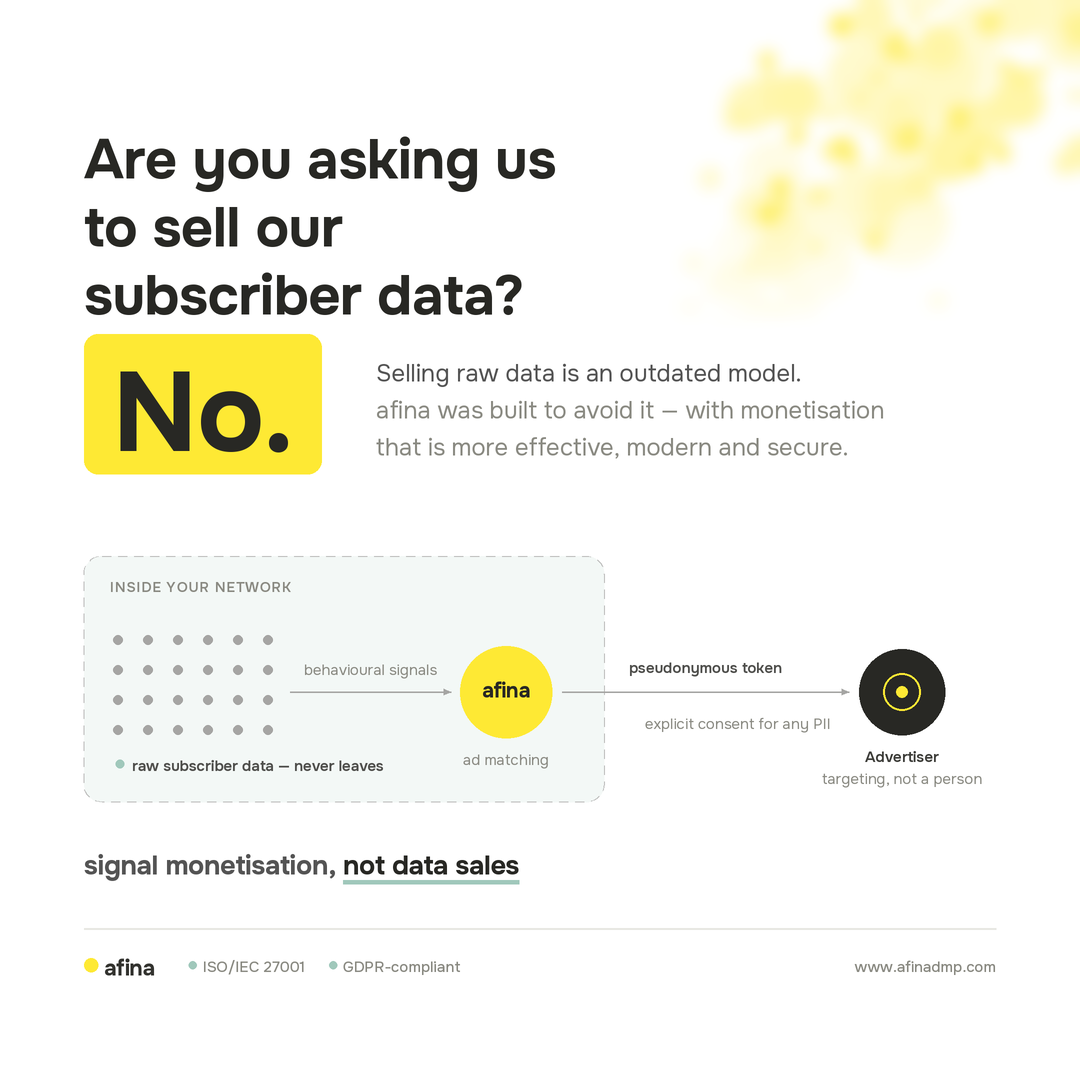
Almost every first conversation we have with an operator starts with the same question: are you asking us to sell our subscriber data?
The answer is no, and it always has been. Selling raw data is an outdated model. afina was built to give operators a way to monetize their network that is more effective, more modern and safer than handing over datasets.
The difference between selling data and monetizing signal is practical. It decides whether a scheme passes a regulator’s review, whether a legal team signs off, and whether the operator keeps control of its most valuable asset.
What data sales look like
In a classic data deal, records leave the operator. A buyer receives a file or a feed, combines it with other sources and uses it as it sees fit. Once the data is out, the operator has no view of how it is used, no share of the value it creates and full exposure if something goes wrong. That is why so many data projects stall at the compliance stage.
What signal monetization looks like
afina works the other way round. Four principles define the model:
1. Raw subscriber data stays inside the operator network. Nothing is exported. The platform runs inside the operator’s environment.
2. Matching happens in the network. Advertiser criteria come to the data, so the data never travels to the advertiser.
3. Subscribers are represented by pseudonymous tokens, never by names or phone numbers. Any transfer of personal information requires the subscriber’s explicit consent.
4. Advertisers get a targeting outcome, an audience they can reach with an offer, without access to any specific individual.
The result is a revenue line that does not depend on moving data anywhere. Offers reach subscribers through the operator’s own channels, such as SMS, RCS or in-app, and the operator is paid on performance, through CPA or revenue share.
Why the distinction matters now
Regulators across MENA, LATAM, Europe and Central Asia are tightening rules on personal data and data localization. Enterprises are starting to pay a premium for technology that keeps data sovereign. Under those conditions, a model built on exporting records gets harder to defend every year. A model where the data never leaves gets easier.
There is a commercial argument as well. An operator that sells a dataset sells it once. An operator that monetizes signal keeps the asset, keeps the subscriber relationship and earns every time a campaign runs. Participating operators see an ARPU uplift of around 5%.
How we prove it
Privacy has to be built into the architecture from the first line of code. afina is certified to ISO/IEC 27001:2022 and operates in line with GDPR. Both are independent checks that the model does what we say it does.
If your team has paused a data project because of compliance, start the conversation again from this question: what would it take to monetize the signal without moving the data? That is the problem afina was designed to solve.